Author: G. Aydin

AI is transforming sport. Injury prediction, performance analytics, tactical planning, the promises are enormous. But behind this transformation, critical questions remain unanswered: Who owns athletes' data? Can an algorithm end a career? And as grassroots clubs are excluded from this revolution, what happens to equality?
Using our SF4Sport methodology, we focused on this space together with TRSGD Sport Volunteers Association. The work involved three interconnected layers:
Environmental scanning: identifying signals of change, emerging trends and potential wild cards across the AI-in-sport landscape.
Policy alignment: mapping these findings against EU policy frameworks including the EU AI Act (Regulation 2024/1689), the European Parliament ESM Resolution (October 2025), Erasmus+ 2026, GDPR and the EU Sport Work Plan 2024–2027.
Evidence synthesis: reviewing peer-reviewed academic sources published between 2019 and 2026, alongside institutional reports from the European Commission, SHARE 2.0, FEPSAC and others.
The picture that emerged is both promising and urgently demanding action. Here are 5 signals, 3 trends and 2 wild cards likely to shape the future of AI and athlete rights in European sport.
Signal 1 - Athlete Mental Health Is Now a Crisis
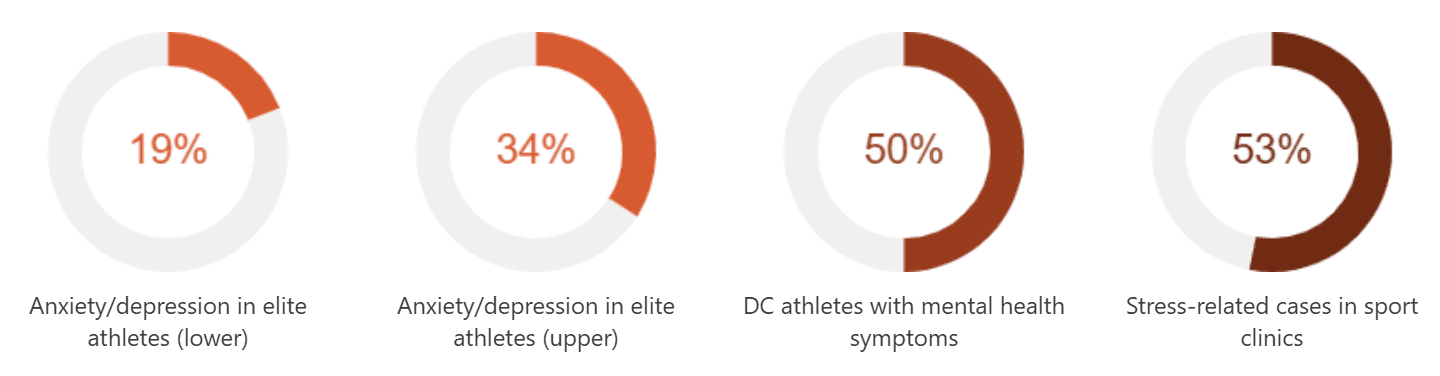
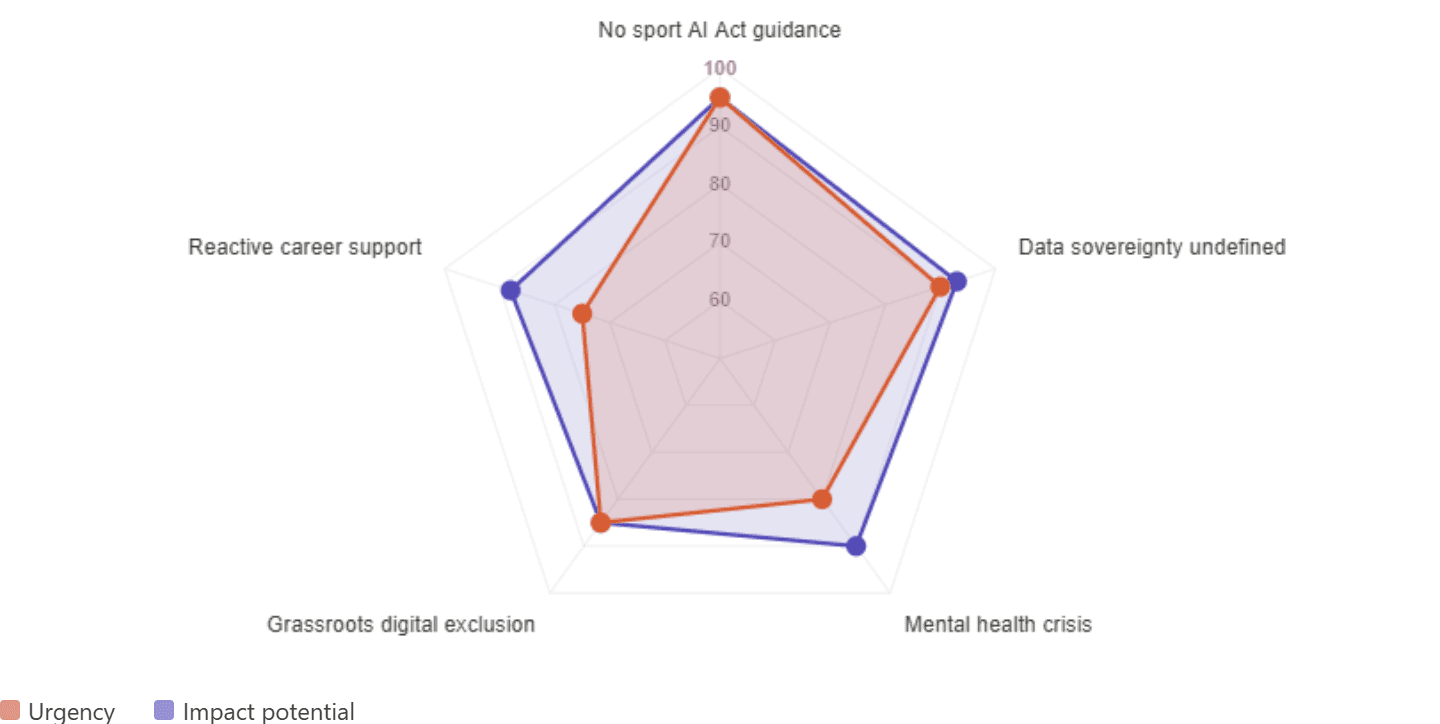
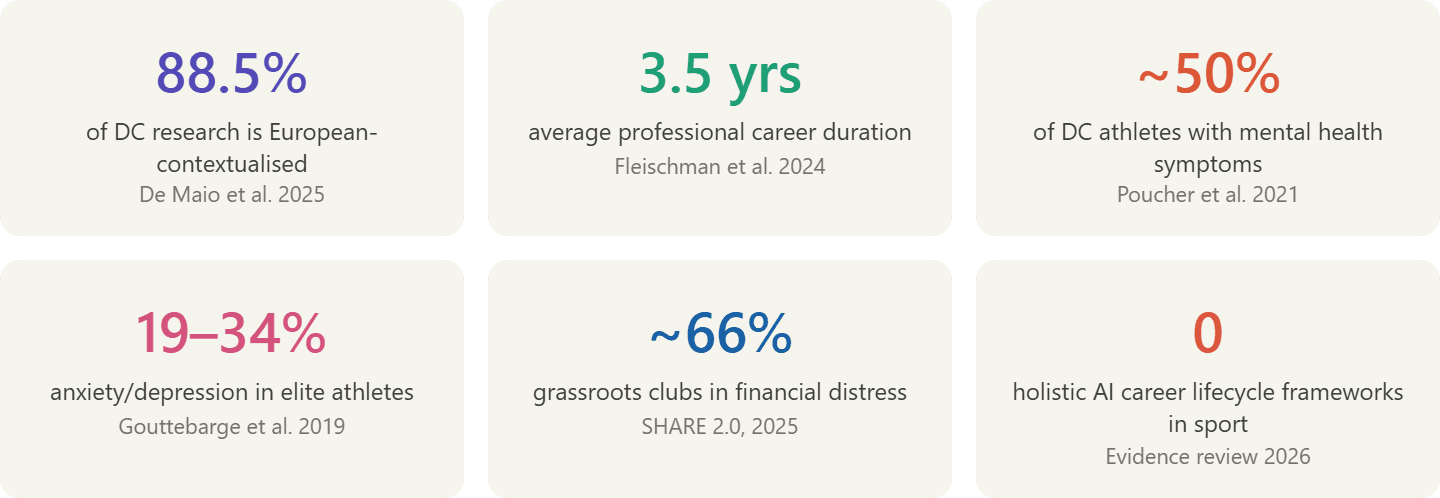
Mental health is now widely recognised as a structural issue in sport, not an individual failing. Between 19% and 34% of elite athletes experience clinical-level anxiety or depression, according to a landmark meta-analysis by Gouttebarge et al. (2019). Among dual career athletes, approximately 50% experience at least one mental health symptom during their career (Poucher et al., 2021).
A 2025 study focusing on elite sports-centred mental health clinics found that stress-related and somatoform disorders account for 53% of cases, with stigma, mental health illiteracy and lack of sports-specific clinical expertise identified as major barriers to help-seeking. A separate 2025 scoping review covering European sport schools found that the dual demands of sport and education create specific vulnerability patterns, particularly for female student-athletes.
Research consistently identifies three critical risk windows: significant injury, the transition to retirement, and periods of performance difficulty. These are precisely the lifecycle moments where proactive support could make the greatest difference.
Yet no proactive, AI-powered early warning system for athlete mental health currently exists. All current approaches are reactive.
Signal 2 - Average Career Lasts 3.5 Years - And Transition Support Is Reactive
The average professional sports career lasts approximately 3.5 years, according to a 2024 systematic review by Fleischman et al. covering 151 peer-reviewed articles on career transition. Within this extraordinarily compressed window, most athletes have little opportunity to prepare for life after sport.
The field has moved away from the narrow concept of "retirement" toward a broader understanding of career transition as a lifelong, multi-stage process. A 2025 systematic review by Voorheis et al., analysing 117 manuscripts, identified mental health support as the central unmet need for retiring elite athletes. The review found that proactive identity negotiation and dual-career planning are the two most important protective factors. Athletes who retire involuntarily, due to injury or deselection, experience significantly worse psychological outcomes than those who choose their retirement timing.
Research from Frontiers in Psychology (2024) confirmed that financial support and pre-retirement education are the strongest predictors of a smooth transition, while insufficient life skills and lack of prior education significantly inflate stress during career termination.
The vast majority of existing Career Assistance Programmes activate at or near the point of retirement rather than being integrated throughout the athletic career. Support arrives too late.
Signal 3 - Who Owns the Athlete's Data?
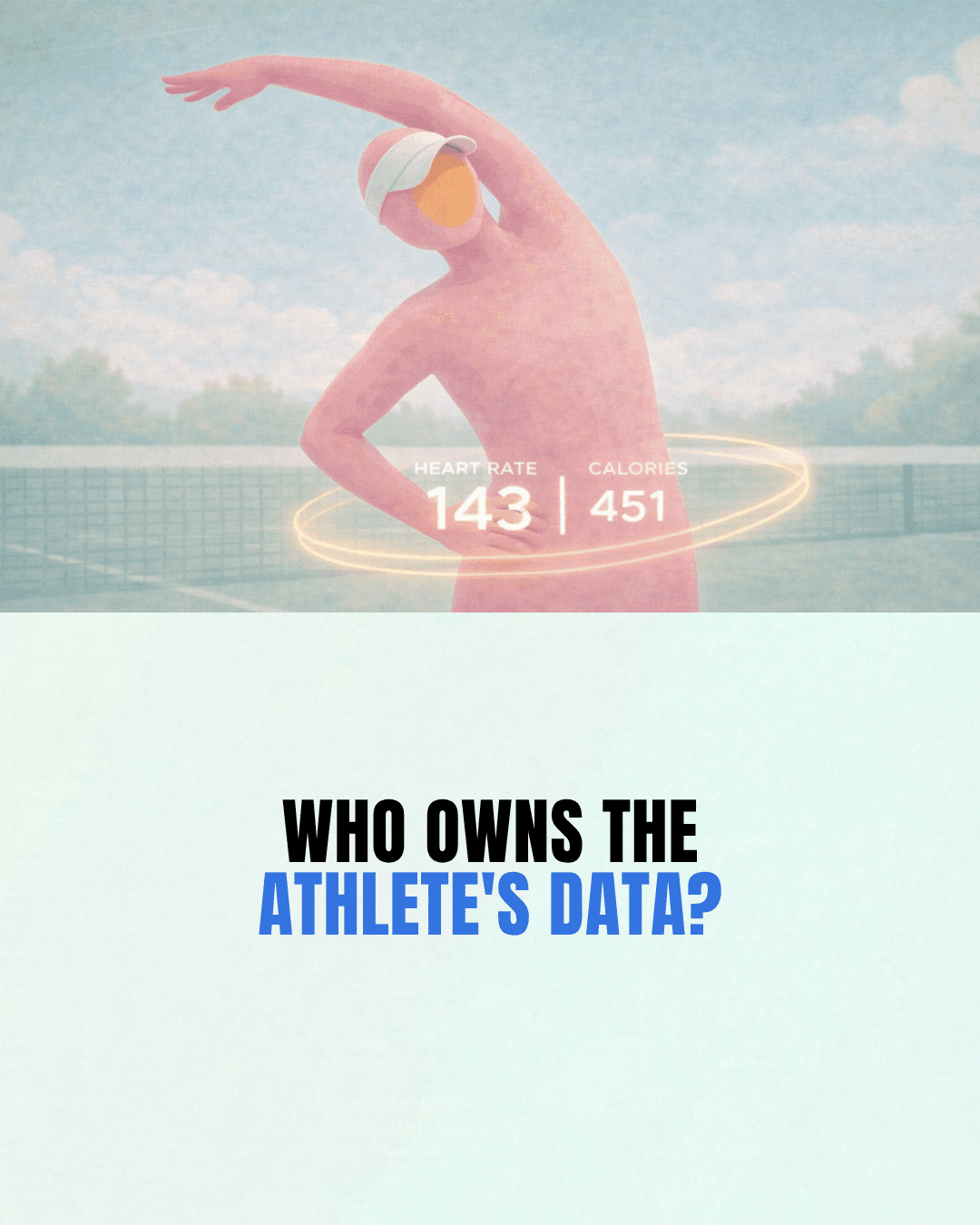
Sport technology generates continuous data flows from athletes' bodies, yet legal ownership remains unclear. Determining ownership among clubs, athletes, federations and tech providers is legally complex and largely unresolved (Kwon, 2025).
Athletes, especially younger ones, face significant power imbalances with employers who may use biometric data in contract decisions. The NBA's latest collective bargaining agreement has explicitly prohibited the use of wearable data in contract negotiations, one of the first formal responses to this growing concern.
The "black box" problem compounds the issue. If an athlete is excluded from selection based on an AI analysis they cannot understand, this creates serious legal exposure. "Explainable AI" is increasingly demanded but rarely delivered.
A 2025 systematic scoping review published in the Journal of Sport and Health Science identified four dominant ethical concerns: fairness and algorithmic bias, privacy and data protection, transparency and explainability, and accountability. The review called for ethical frameworks specifically tailored to underrepresented sports contexts, noting that most existing guidance focuses on elite professional environments.
The intersection of AI, biometric data and athlete rights is one of the fastest-moving and least-resolved areas in European sport policy.
Signal 4 - 66% of Grassroots Clubs in Financial Distress - The Digital Divide Grows
High-cost AI tools are primarily accessible to elite professional clubs. The European Commission's SHARE 2.0 report (September 2025) confirmed that approximately two-thirds of European grassroots sport clubs report financial distress, severely limiting their capacity to adopt, evaluate or govern AI tools responsibly.
A 2025 European Commission publication on AI in the Sport Sector noted significant access inequalities: elite clubs can afford advanced AI tools while grassroots clubs generally cannot, risking a widening performance and health-outcome gap. The report recommends flexible "AI experimentation groups" at grassroots club level, supported by modest financial and organisational resources.
This is not a minor gap. Grassroots clubs form the foundation of the European Sport Model's pyramid, and their exclusion from the AI revolution threatens the integrity of the entire model.
The democratisation of AI in sport, making responsible, ethical AI tools accessible at the grassroots level, is simultaneously an equity imperative, a policy priority and an underserved market.
Signal 5 - EU AI Act Is in Force - But Sport Has No Guidance
The EU AI Act entered into force on 1 August 2024, representing the world's first comprehensive binding regulation of AI. Its risk-based classification system has direct implications for sport.
AI systems used in athlete employment or performance evaluation risk classification as "high-risk" under the Act, requiring risk management systems, high data quality, human oversight, documentation and transparency obligations. Analysis of athlete biometric data, emotional state monitoring and performance profiling within an employment context all trigger high-risk provisions.
Human oversight is mandatory for high-risk systems under Article 14. The Act's requirement for explainability and human oversight directly challenges the current practice of using opaque AI models in athlete assessment.
A 2025 review noted that the EU legal framework lacks sport-specific guidance, creating a regulatory gap. A separate European Commission report confirmed that while AI offers major opportunities across the sports ecosystem, data privacy concerns and high costs are the greatest barriers to widespread adoption, especially at the grassroots level.
No sport-specific implementation guidance for the EU AI Act currently exists. This is a critical regulatory vacuum.
Trend 1 - Athletes Are Now "Workers" - And That Changes Everything
On 7 October 2025, the European Parliament adopted its European Sport Model resolution by 552 votes to 52, an overwhelming 86% majority.
Article 39 is historic: for the first time, professional athletes are explicitly recognised as "workers" entitled to the same protections as other employees under EU labour law. This is not a symbolic gesture. It triggers a cascade of downstream legal, governance and policy consequences.
If athletes are workers, then AI tools used to evaluate, select or monitor them in an employment context are potentially high-risk systems under the EU AI Act, requiring risk management protocols, transparency obligations and human oversight. If athletes are workers, their biometric and performance data attracts the same protections as other employee data under GDPR's Article 9. If athletes are workers, financial planning and career transition support becomes an occupational welfare matter, not a voluntary add-on.
Article 41 explicitly calls for EU institutions and Member States to support initiatives in dual careers, lifelong learning, post-retirement periods, personal development and the mental health of athletes.
FIFPRO Europe's President described the vote as a defining moment for player welfare and player rights.
Trend 2 - AI in Sport Is Booming - But Ethics Can't Keep Up
The global AI-in-Sports market was valued at approximately 7.5–8.9 billion euros in 2025 and is projected to reach 27 billion euros by 2030. The European sports technology market is on a parallel trajectory from 4.8 billion euros (2025) to 14.5 billion euros (2034). This growth is real and accelerating, but its distribution is deeply unequal.
A 2025 narrative review in the Journal of Science and Medicine in Sport described AI as a "transformative force" across sport, but emphasised the need to balance innovation with data governance and equity considerations. A separate systematic scoping review identified four dominant ethical concerns: algorithmic bias and fairness, privacy and data protection, transparency and explainability, and accountability.
A 2025 narrative review on ethical bias in AI-driven injury prediction examined 24 empirical studies. It found that while AI models demonstrably improve injury prediction accuracy, they are frequently deployed without robust ethical safeguards. Power asymmetries between athletes and institutions persist, and mechanisms for athlete data ownership, transparency and the right to contest algorithmic decisions are largely absent.
The technical development of AI in sport is racing ahead. The ethical and governance framework is critically lagging behind.
Trend 3 - Dual Career Support Has Been Stuck for a Decade
The EU Dual Career Guidelines were published in 2012. More than ten years later, structural barriers persist.
A 2025 scoping review by De Maio et al. covering 3,000+ student-athletes across 23 countries found that 88.5% of all dual career research originates from the European context, confirming Europe as both the primary focus and the testing ground. Recurring barriers include lack of flexible education programmes, insufficient financial support and inadequate inter-institutional coordination.
The most authoritative recent synthesis, the FEPSAC Position Statement on Athletes' Dual Careers (Stambulova et al., 2024), identified seven research-based postulates for dual career excellence, covering context, pathways, challenges, resources, support, mental health and development environments. It confirmed that the structural barriers identified in 2012 have not yet been fully addressed.
The vast majority of existing Career Assistance Programmes are reactive rather than preventive or proactive, a finding echoed across multiple systematic reviews. A holistic, AI-enabled dual career methodology still does not exist.
The implementation gap in the EU Dual Career Guidelines has persisted for over a decade. The methodology is missing.
The Gap - AI Is Transforming Elite Sport But No Holistic Framework Protects the Athlete
This is perhaps the most important finding of the entire analysis.
AI tools are now embedded across elite sport, from injury prediction and biomechanical analysis to tactical scouting and talent identification. A 2025 critical review in Psychology of Sport & Exercise confirmed that AI research in sport has concentrated on athlete assessment, selection and training, not on career lifecycle support or post-sport transitions. A narrative review published in the Journal of Sports Sciences (2025) captures both the promise and the limits: AI can enhance coaching strategy, personalise training, improve diagnostics and monitor mental well-being, but data privacy, ethical concerns and unequal adoption remain significant challenges.
On one side of the divide: injury prediction, performance analytics, tactical scouting, talent identification, load management. All advancing rapidly. On the other side: ethical AI framework for sport, athlete data sovereignty model, career lifecycle support, mental health early warning, grassroots AI access. None of these exist yet.
No holistic AI framework currently covers the full athlete career arc, development, performance and transition, with data sovereignty at its core. The EU AI Act is in force, but sport-specific guidance is absent. Athletes are recognised as workers, but the systems that evaluate them remain opaque. Career support programmes exist, but they activate too late.
The technology is advancing. The protection is not. This represents both the biggest blind spot and the biggest opportunity identified in this analysis.
Wild Card 1 - What If a Major AI Ethics Scandal Hits Sport?
A wild card is a low-probability, high-impact event that could disrupt the entire landscape overnight.
Imagine a high-profile case: an athlete's career ended by an AI system with inadequate oversight, a medical record misused through algorithmic processing, or a selection process legally contested because the athlete could not understand or challenge the data-driven decision.
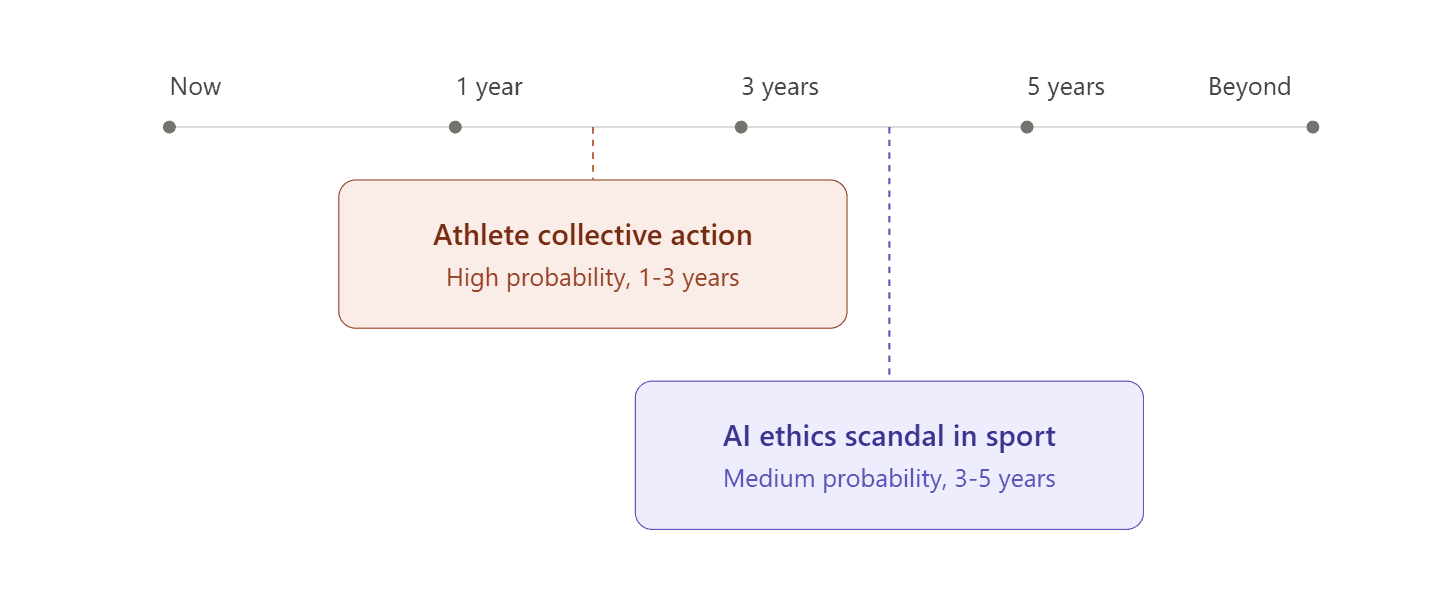
Such a scandal could trigger significant backlash against AI in sport, tightening regulation and slowing adoption overnight. The probability is medium, within a 3-5 year window. The impact, if realised, would be disruptive.
The key tension is between innovation and trust. Organisations that have already built robust ethical AI frameworks, including human oversight, explainability and athlete consent mechanisms, will be protected. Those that have deployed AI without these safeguards will face severe reputational and legal exposure.
Wild Card 2 - What If Athletes Mobilise for Collective Rights?
Building on the recognition of athletes as workers in October 2025, a wave of collective bargaining across professional sports could erupt. The ingredients are present: a new legal foundation (Article 39), growing awareness of data rights, unresolved questions about AI-driven decisions, and athlete unions and player associations with increasing capacity and political influence.
This wave could rapidly establish new standards for data rights, career support and mental health provision, accelerating mid-term trends into the near term. The probability is high, within a 1-3 year window. The impact would be transformative.
The NBA's prohibition on wearable data in contract negotiations is an early signal of what collective athlete action can achieve. If European athlete unions follow suit, demanding data portability, algorithmic transparency and minimum career transition support, the landscape could shift rapidly.
Early-mover projects and organisations that have already built athlete-centred frameworks would become immediately relevant.
So What Now?
These signals and trends make one thing very clear: building systems that protect athletes' data, support their careers holistically and deploy AI within an ethical framework is not a future aspiration, it is an immediate necessity.
Three priority areas emerge from the analysis:
Priority 1 - An ethical AI framework for sport
The EU AI Act is in force but sport-specific implementation guidance does not exist. Sport organisations using AI in athlete evaluation or management need to assess whether their systems meet high-risk obligations, and most will not. Producing the first practitioner-grade guidance document designed to help sport organisations comply with the Act's obligations would fill a critical regulatory vacuum. This aligns with the EU Sport Work Plan 2024–2027 Priority 2 on innovation and digitalisation.
Priority 2 - Athlete data sovereignty
Athletes generate continuous biometric and performance data, but ownership, consent and portability remain unresolved. Establishing athlete-centred data sovereignty models, including granular consent mechanisms, data portability protocols and the right to contest algorithmic decisions, would translate GDPR requirements into actionable athlete-facing protocols. This operationalises GDPR Article 20 as a positive empowerment instrument rather than a passive protection.
Priority 3 - Proactive career lifecycle support
The average professional career is 3.5 years. Career support must begin at the development stage, not at retirement. A holistic framework covering development, performance and transition, enhanced by AI but governed by human oversight, would address the persistent methodology gap in the EU Dual Career Guidelines. This directly operationalises EP ESM Resolution Article 41.
EU policy alignment
Our analysis found strong alignment between these findings and six active EU policy frameworks. The strongest connections run through the EP ESM Resolution (October 2025, Articles 39 and 41), the EU AI Act (Regulation 2024/1689, high-risk classification provisions), the EU Sport Work Plan 2024–2027 (Priority 2 on innovation and digitalisation, key topics on athletes' rights and mental health), the Erasmus+ 2026 Programme Guide (horizontal priorities on Digital Transformation and Inclusion & Diversity), GDPR (Articles 9, 20 and 22) and the EU Dual Career Guidelines (2012). The convergence of these frameworks in the 2026–2028 window creates a unique opportunity for action.
This article is a part of the SF4Sport Strategic Foresight Series by Sport Singularity, produced in partnership with TRSGD Sport Volunteers Association. The analysis draws on peer-reviewed sources (2019–2026) and maps EU policy frameworks including the EU AI Act, EP ESM Resolution, Erasmus+ 2026, GDPR and the EU Sport Work Plan 2024–2027.
March 2026, Sport Singularity, SF4Sport